ITMA 67-Blade Trolley Shredder Cum Pulveriser
Frequently Asked Questions
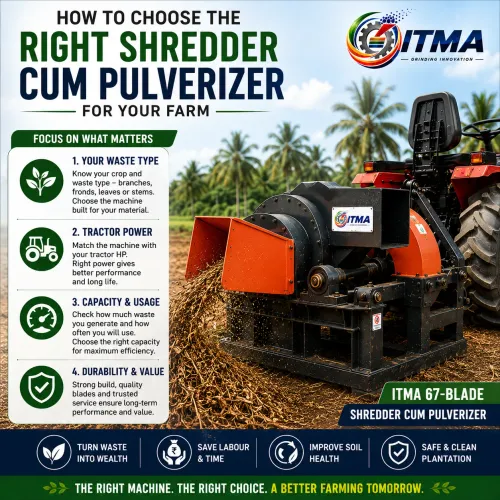
Buying a heavy-duty shredder is a major investment. Farmers naturally have questions about tractor power, blade count, capacity, mobility, maintenance and the type of waste the machine can process.
Here are the most common questions in simple language.
1. What is an ITMA 67-Blade Shredder Cum Pulverizer?
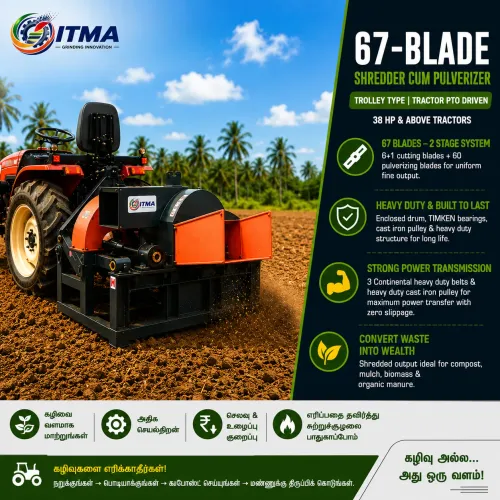
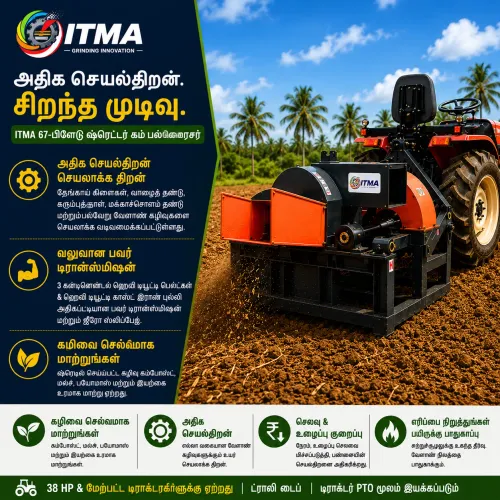
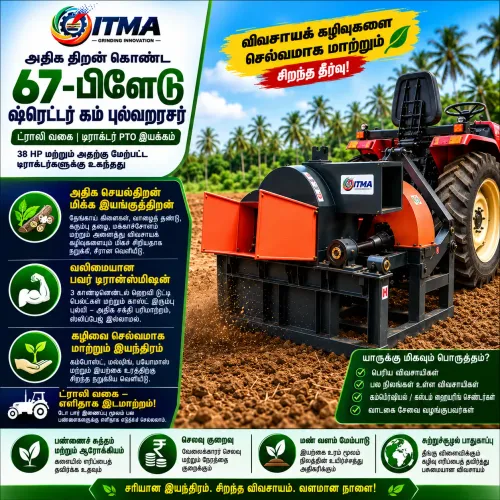
It is a tractor PTO-driven agricultural waste processing machine designed to cut, shred and pulverize agricultural biomass.
The machine is designed for heavy-duty applications and is particularly useful where large quantities of agricultural waste need to be processed.
2. Why is it called a 67-Blade machine?
Because the machine has a two-stage blade system:
7 heavy-duty cutting blades + 60 pulverizing blades = 67 blades.
The first stage handles the larger material, while the second stage further reduces the material.
3. What is the advantage of having two stages?
Think of it like cutting a large branch with a knife versus first breaking it into manageable pieces and then processing it further.
The first stage tackles the larger agricultural residue.
The second stage further reduces the material.
This helps create a more manageable shredded output.
4. What tractor is required?
The trolley-type 67-Blade model is designed for 38 HP and above tractors.
The actual tractor requirement can also depend on:
- Type of waste
- Thickness of material
- Moisture content
- Feeding rate
- Working conditions
ITMA can recommend the appropriate setup based on your actual application.
5. Can it process coconut branches?
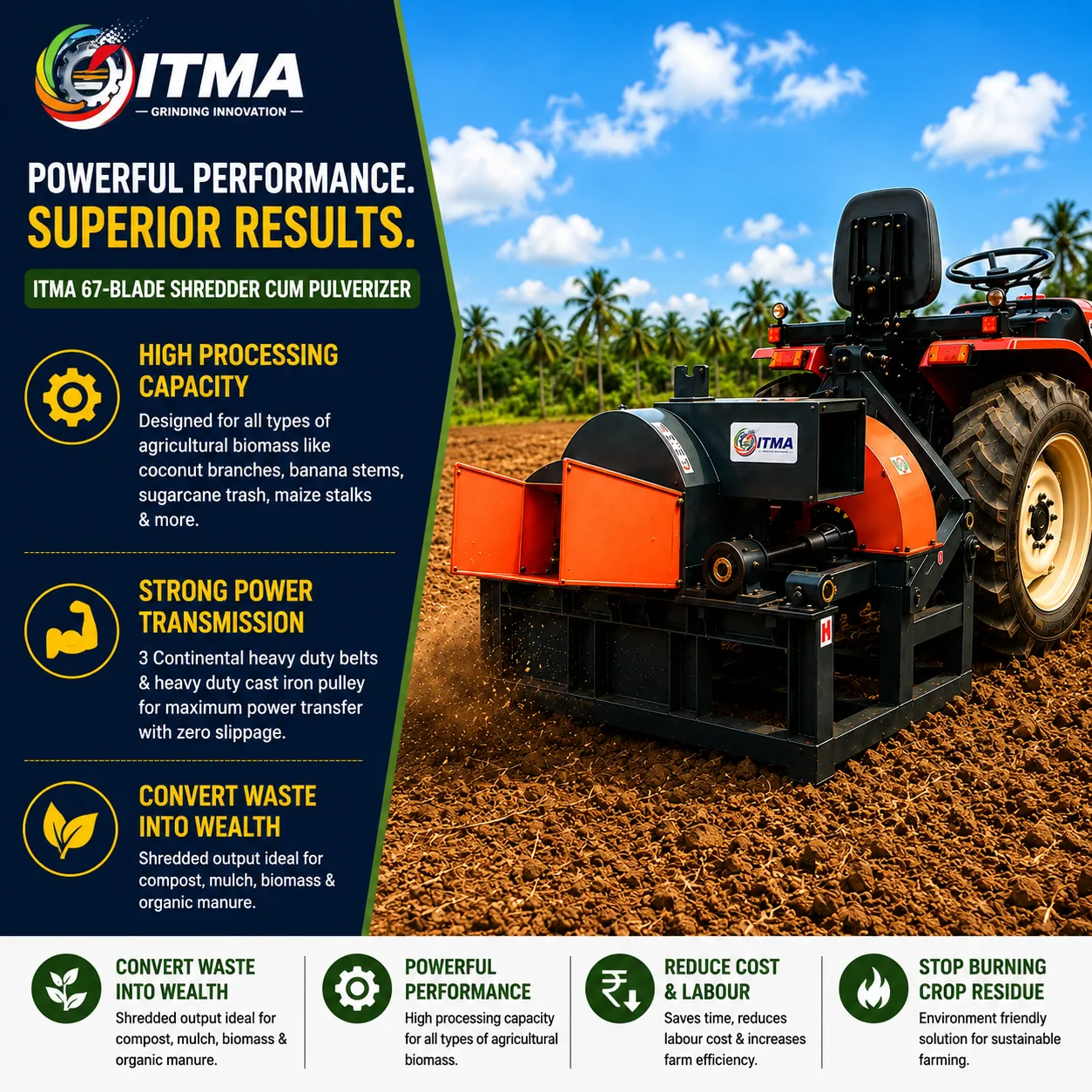
Yes, the machine is designed for agricultural biomass applications including coconut branches, fronds and other suitable plantation residue.
The maximum material size and suitability should always be evaluated according to the actual material being processed.
6. Can it process banana stems?
Yes, suitable banana stems and leaves can be processed, along with other agricultural biomass.
Because agricultural materials vary considerably in size, moisture and hardness, the machine should be selected and operated according to the specific application.
7. Can it process sugarcane and maize residue?
The machine is designed for a variety of agricultural biomass, including suitable sugarcane trash and maize stalks.
For a specific material, ITMA can advise on suitability and expected performance.
8. Why is the trolley design useful?
The trolley allows the machine to be moved from one location to another.
This is particularly useful when a farmer has multiple farms or when the machine is being used as a commercial service.
For example:
Coconut Farm → Arecanut Farm → Banana Farm → Contractor's Site
Instead of purchasing separate machines for every location, a mobile machine can be transported between suitable work sites.
9. Who would benefit most from the trolley model?
This model can be particularly useful for:
- Large plantation owners
- Farmers with multiple locations
- Custom hiring centres
- Agricultural contractors
- Rental operators
- Commercial shredding service providers
10. What makes the machine heavy-duty?
The machine incorporates heavy-duty components such as:
- Enclosed rotary drum
- Rigid outer frame
- Heavy-duty bearings
- Cast-iron pulley
- Hardened steel main shaft
- Heavy-duty belts
- High-wear-resistance alloy blades
These components are selected for demanding agricultural applications.
11. What bearings are used?
The machine uses TIMKEN heavy-duty bearings.
The purpose is to provide dependable support for rotating components under demanding operating conditions.
12. What type of belts are used?
The machine uses three Continental heavy-duty belts for power transmission.
The belt system is designed to transfer PTO power reliably while reducing the likelihood of slippage during operation.
13. What is the main shaft made of?
The main shaft is made from hardened steel and is precision-machined for strength, balance and resistance to shock loads.
14. What type of blades are used?
The machine uses special alloy, high-wear-resistance blades designed for agricultural biomass processing.
The blade system consists of:
7 cutting blades + 60 pulverising blades.
15. Can the machine help reduce labour?
Yes.
Instead of manually cutting, collecting, carrying and disposing of large quantities of agricultural waste, the waste can be mechanically processed.
This can reduce the time and labour required for waste management.
Actual savings depend on the farm size, waste quantity, labour cost and machine utilization.
16. Can the shredded material be used for manure?
The processed biomass can be used as a feedstock for composting and organic manure preparation.
It can also be used for suitable mulching applications.
The final use depends on the crop, material and farmer's composting practice.
17. Is this machine suitable for a small farmer?
That depends on the quantity of waste generated.
If you generate only a small amount of waste occasionally, a large heavy-duty machine may not be the most economical choice.
But if you have:
- Large acreage
- Regular pruning
- Multiple farms
- High biomass generation
- Contract shredding work
then the larger trolley model can provide much greater value.
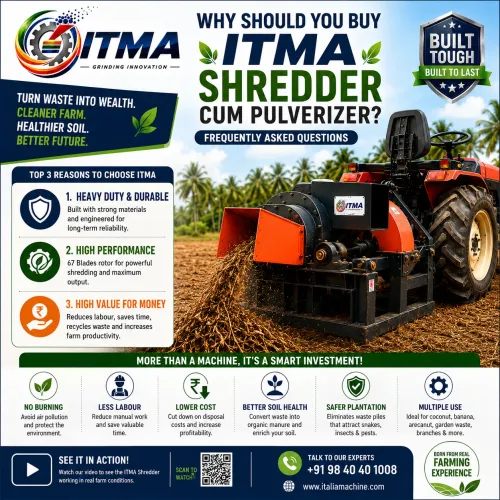
18. Why should I choose the ITMA trolley model?
The main advantages are:
Heavy-duty construction
67-blade two-stage processing
38 HP and above tractor compatibility
Trolley-based mobility
Industrial-grade power transmission
Designed for regular agricultural use
19. What should I tell ITMA before buying?
Simply provide these details:
Crop: Coconut / Banana / Arecanut / Other
Waste: Branches / Leaves / Stems / Mixed biomass
Tractor: HP and model
Farm size: Approximate acres
Waste quantity: Approximate daily or weekly quantity
Usage: Own farm / Rental / Contract work
Mobility: One farm / Multiple farms
These details help ITMA recommend the appropriate machine and configuration.
Still Not Sure Which Machine You Need?
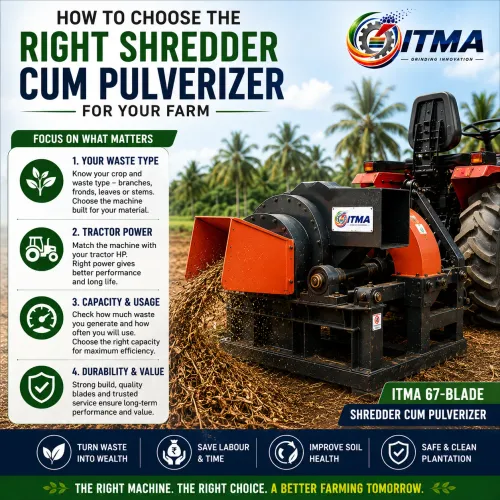
Don't choose a shredder based only on the number of blades or the price.
Choose based on:
Your waste + your tractor + your workload + your mobility requirement.
If you share these four details with ITMA, our team can help you identify the suitable machine.
Keywords