'Our Farm Was Filled with Coconut Waste... Today, It's Feeding Our Soil.' – A Real Farming Story
Coimbatore, Tamil Nadu
Every coconut farmer understands one unavoidable reality—healthy trees produce healthy growth, and healthy growth means regular pruning. While pruning keeps plantations productive, it also creates another challenge: piles of coconut branches, dry fronds, leaf stalks, and other plantation residue scattered throughout the farm.
This was the situation faced by Mr. Ramesh (name can be changed to your customer's name), a coconut plantation owner in South India. After every pruning season, his farm was covered with heaps of coconut waste. What looked like harmless dry branches slowly became one of the biggest operational problems on his plantation.
Instead of seeing this waste as a resource, it had become a growing burden.
WHY Was the Waste Becoming a Serious Problem?
Every pruning season added another layer of dry coconut leaves and thick branches to the plantation.
Initially, the waste was simply stacked in one corner of the farm. Over time, those piles became larger and larger.
Soon, new problems began to appear.
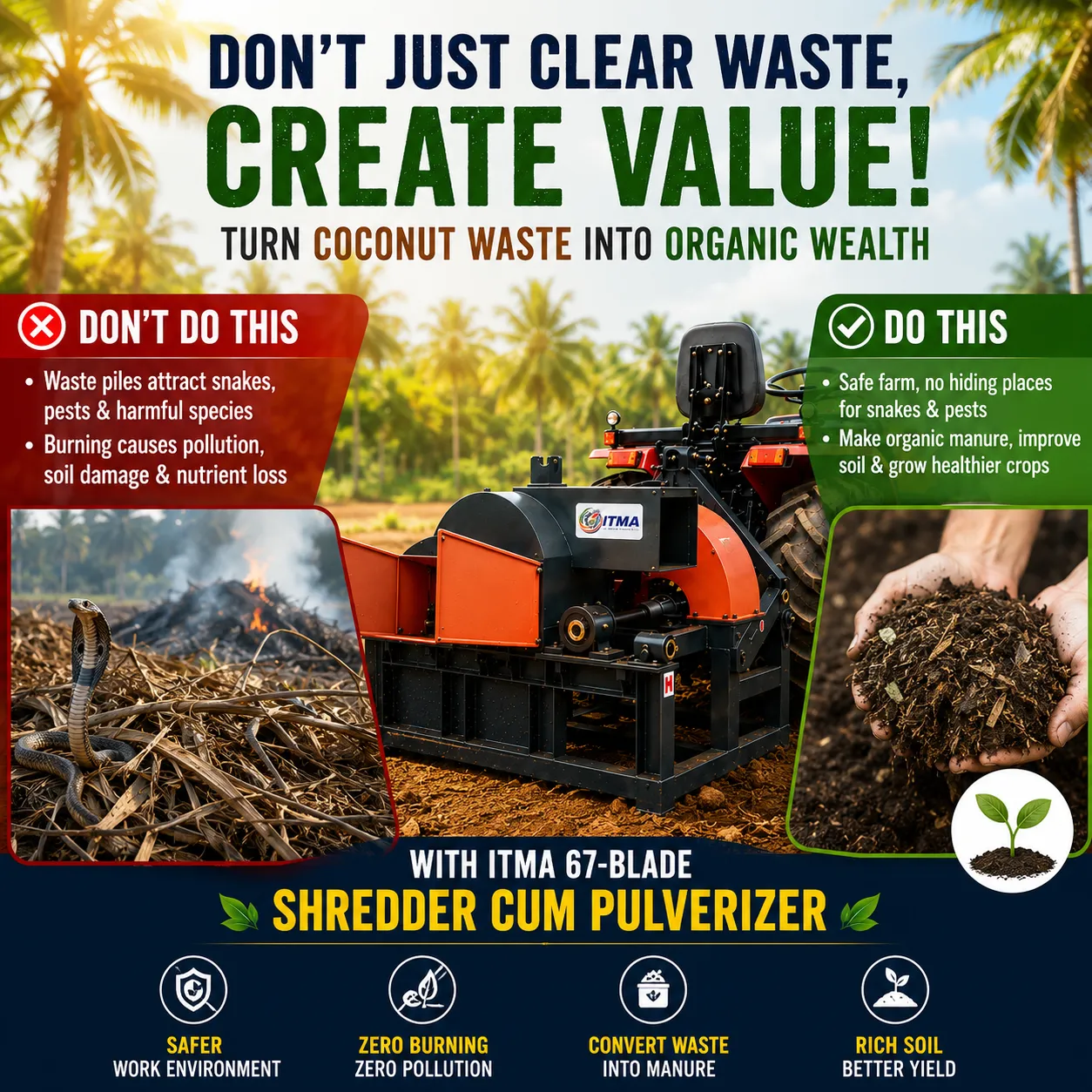
The accumulated waste started becoming a natural shelter for snakes, rats, insects, scorpions, termites, and other unwanted pests. Dense piles of dry branches created cool, undisturbed hiding places where these animals could live safely.
Farm workers became hesitant to walk through certain parts of the plantation because visibility was poor and they feared disturbing hidden snakes or other creatures.
Routine activities such as harvesting coconuts, irrigation maintenance, fertilizer application, and transporting produce became increasingly difficult because blocked pathways forced workers to take longer routes around the waste piles.
Apart from creating safety concerns, the dry biomass also increased the risk of accidental fire during hot summer months.
'Burning Was Never the Right Solution.'
Like many plantation owners, Mr. Ramesh initially considered burning the waste.
Although burning cleared the land quickly, it came with several disadvantages.
- Valuable organic nutrients were lost.
- Thick smoke affected the surrounding environment.
- Air pollution increased.
- Soil microorganisms were damaged.
- The farm lost biomass that could have been returned to the soil naturally.
He realized that every pile he burned represented nutrients that his coconut trees would eventually need again.
He wanted a better and more sustainable solution.
WHAT Made Him Choose ITMA's 67-Blade Shredder Cum Pulveriser?
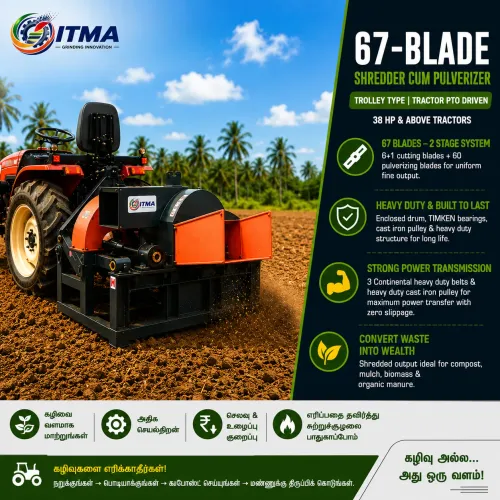
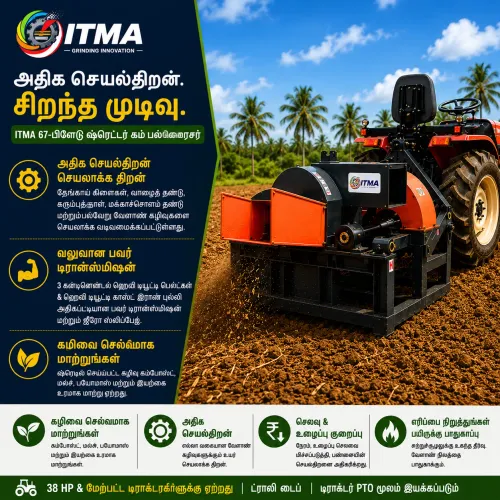
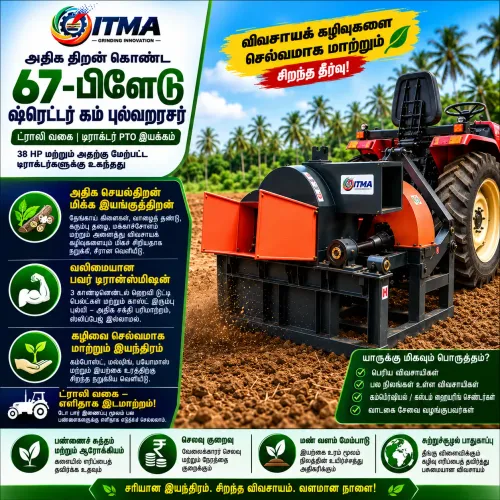
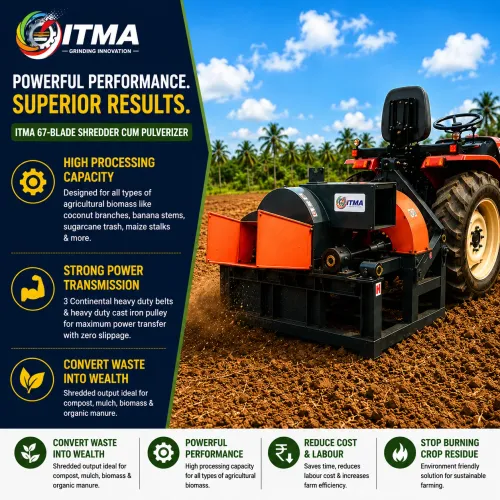
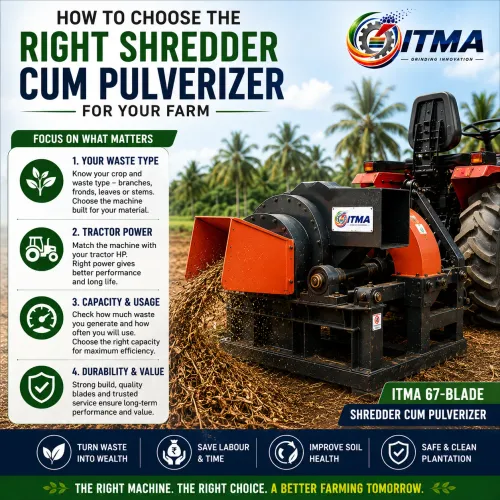
While exploring different waste management options, he came across the ITMA Big Shredder Cum Pulverizer (67-Blade Model).
Unlike ordinary shredders, this machine was specifically engineered for handling bulky agricultural residue generated in plantations.
He found several features particularly valuable:
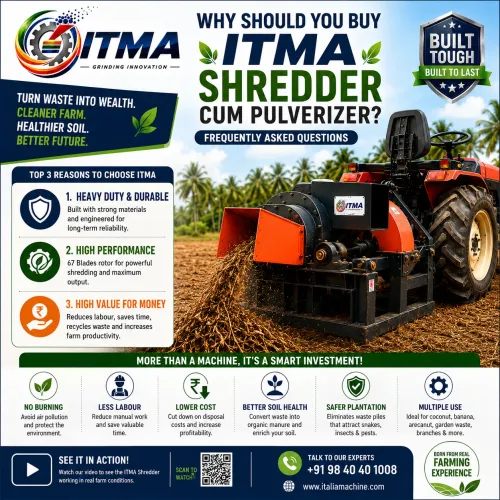
- Heavy-duty industrial construction
- 67 precision-engineered cutting blades
- Capable of shredding thick coconut branches and dry fronds
- Consistent high-output performance
- Low-maintenance operation
- Built for continuous plantation use
Instead of treating coconut waste as a disposal problem, the machine offered a way to convert it into something useful.
HOW Did the Machine Change His Plantation?
Once the machine was put to work, the change was visible almost immediately.
Instead of collecting branches into dangerous piles or burning them, workers began feeding the material directly into the shredder.
Within minutes, bulky coconut branches, dry leaves, and plantation residue were transformed into uniformly shredded organic material.
The shredded biomass was then reused across the farm for:
- Organic manure preparation
- Compost production
- Mulching around coconut trees
- Improving soil moisture retention
- Returning valuable nutrients back to the land
The farm became cleaner, safer, and easier to manage.
Most importantly, workers could move freely through the plantation without worrying about hidden waste piles.
WHEN Did the Benefits Become Visible?
The improvements were noticeable during the very first pruning season.
Instead of spending days transporting or burning waste, the plantation team processed residue immediately after cutting.
The results included:
✅ Clean plantation pathways
✅ Safer working environment for labourers
✅ Reduced hiding places for snakes and pests
✅ No smoke from open burning
✅ Lower labour requirements
✅ Faster compost preparation
✅ Better utilization of agricultural residue
✅ Healthier soil through natural recycling
A Cleaner Farm Is Also a Safer Farm
Keeping agricultural waste scattered across a plantation is more than just a cleanliness issue. Over time, accumulated biomass can obstruct access, encourage pests to settle, and make routine farm work more difficult.
By processing coconut waste soon after pruning, farmers can maintain open pathways, improve worker safety, reduce fire risks, and recycle valuable organic matter back into the soil instead of losing it through burning.
For Mr. Ramesh, the ITMA Shredder Cum Pulverizer did more than clear waste—it changed the way his plantation operates.
Watch the Transformation Yourself
Reading about this experience tells only part of the story.
Seeing the machine process thick coconut branches in real plantation conditions gives a much clearer picture of its performance and practical value.
🎥 Watch the complete field demonstration below to see how the ITMA 67-Blade Shredder Cum Pulveriser converts bulky coconut plantation waste into reusable organic material within minutes.
Whether you own a coconut plantation, arecanut farm, banana field, or other agricultural estate, this demonstration shows how to manage waste efficiently while supporting cleaner, more sustainable farming.
▶ Click the video below and experience the machine in action.
About ITMA Engineering
ITMA Engineering, based in Coimbatore, Tamil Nadu, designs and manufactures agricultural machinery that addresses practical challenges faced by farmers. Its Shredder Cum Pulveriser range is built to handle plantation residue efficiently, helping farmers reduce waste, improve safety, recycle biomass, and adopt more sustainable farming practices. By combining durable engineering with field-tested performance, ITMA Engineering continues to support farmers in turning agricultural waste into valuable resources.
Keywords