A Smarter Way to Manage Coconut Plantation Residue
Published by ITMA Engineering
Every year, coconut plantations generate tonnes of dry fronds, leaf stalks, branches, and other organic residue. For decades, many farmers have relied on burning this waste because it appears to be the quickest way to clean the farm.
However, what seems like a simple solution often creates long-term problems for the soil, the environment, and the farm itself.
Today, more coconut farmers are choosing to recycle plantation waste instead of burning it—and they are seeing the benefits in cleaner farms, healthier soil, and lower maintenance costs.
Why Is Burning Coconut Waste a Problem?
Burning may clear waste quickly, but it also destroys something valuable.
Coconut leaves and branches contain organic matter that can naturally improve soil quality when returned to the land. When burned, these nutrients are permanently lost.
Burning also creates:
- Air pollution and smoke
- Fire hazards during dry seasons
- Loss of beneficial microorganisms in the soil
- Carbon emissions
- Wasted organic material that could have become compost
For farms that generate waste throughout the year, burning becomes a recurring problem instead of a sustainable solution.
The Hidden Problems of Leaving Waste in the Plantation
Some farmers choose not to burn the waste immediately and simply stack it in one corner of the farm.
Over time, these piles become a different kind of problem.
Large heaps of coconut branches and dry leaves often:
- Become hiding places for snakes, rats, scorpions, and insects.
- Obstruct pathways used by workers and tractors.
- Increase the risk of accidental fires.
- Make irrigation and maintenance more difficult.
- Create an untidy plantation that is harder to manage.
A clean plantation is not only easier to work in—it is also safer for everyone.
The Better Alternative: Shred and Reuse
Instead of treating plantation residue as waste, many progressive farmers now process it immediately after pruning.
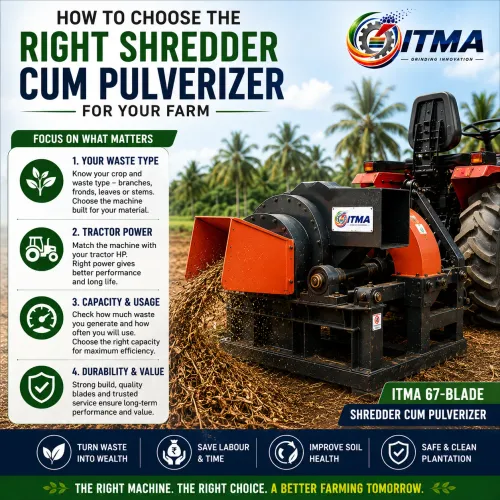
Using a heavy-duty shredder, bulky branches and dry fronds are reduced into smaller particles that can be reused across the farm.
The shredded material can be used for:
- Compost preparation
- Organic manure production
- Mulching around coconut trees
- Moisture conservation
- Soil enrichment
- Biomass recycling
This approach turns a disposal challenge into a valuable farming resource.
Real Benefits Farmers Experience
Farmers who recycle coconut waste instead of burning it often notice practical improvements, including:
Cleaner Plantations
No more large piles of branches occupying valuable space.
Safer Working Conditions
Reduced hiding places for snakes and other pests make daily farm work safer.
Better Soil Health
Organic matter returns to the soil instead of being lost through burning.
Reduced Labour Costs
Waste is processed on-site, reducing transportation and disposal work.
Sustainable Farming
Recycling plantation residue supports environmentally responsible agriculture.
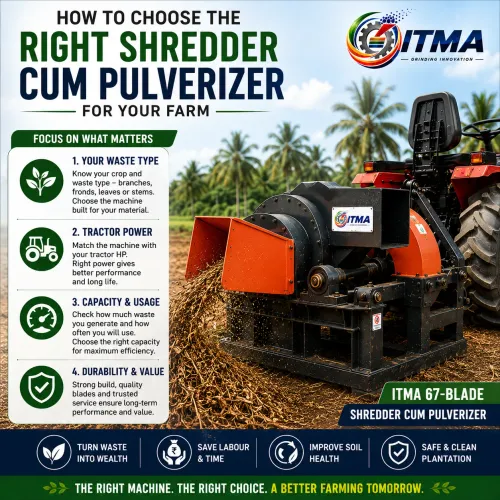
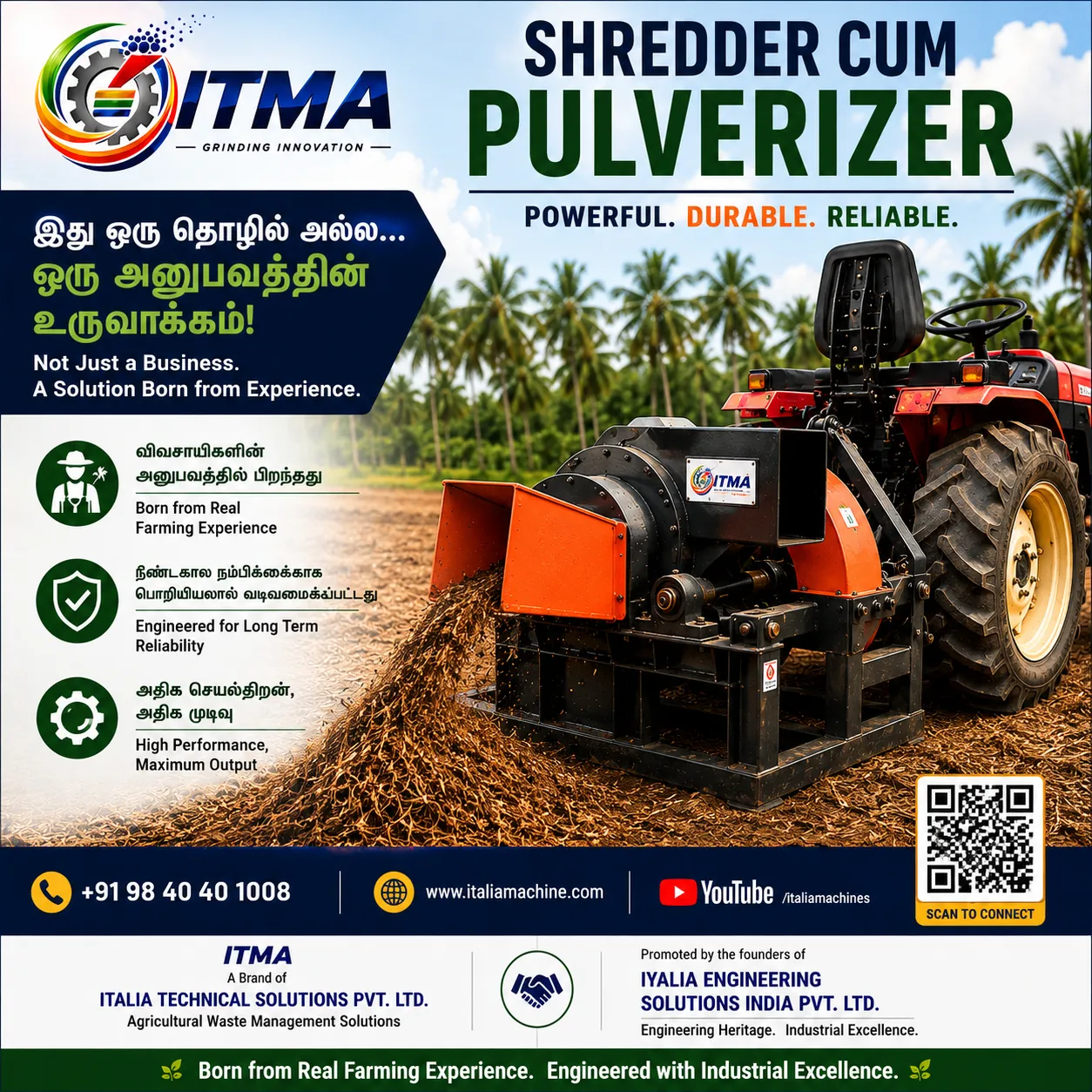
How ITMA's 67-Blade Shredder Cum Pulverizer Helps
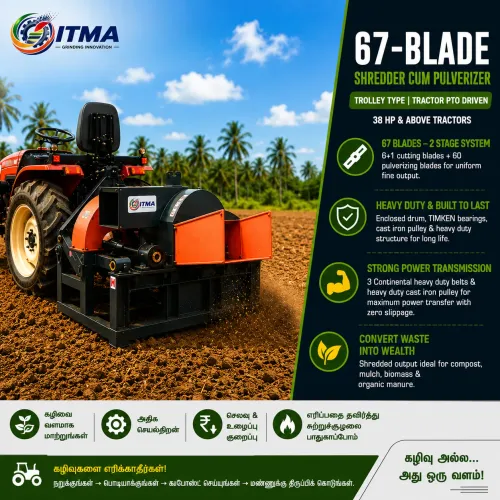
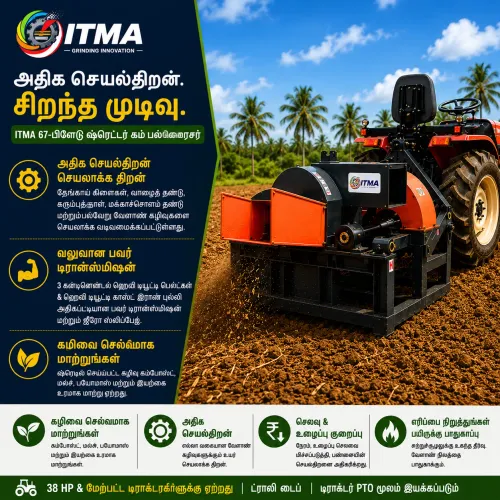
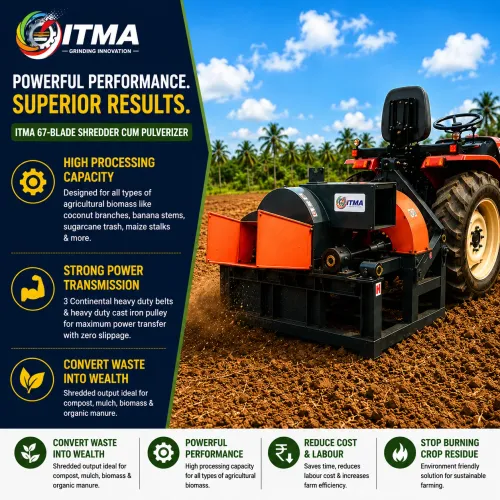
The ITMA 67-Blade Shredder Cum Pulverizer is designed specifically for handling heavy agricultural residue found in coconut plantations.
Its heavy-duty rotor and precision-engineered blades efficiently process:
- Thick coconut branches
- Dry fronds
- Leaf stalks
- Banana stems
- Garden waste
- Roots and tubers
- Other agricultural biomass
The result is uniformly shredded material that is easier to compost, transport, and reuse.
A Small Change That Creates Long-Term Value
Every coconut plantation produces biomass. The question is not whether waste will be generated—it is how that waste will be managed.
Farmers who continue burning lose valuable nutrients and contribute to pollution.
Farmers who recycle plantation residue create healthier soil, cleaner farms, and a more sustainable future.
The choice is simple:
Don't burn your farm's future—recycle it.
Watch the Complete Field Demonstration
Want to see how thick coconut branches are converted into reusable organic material?
Watch our field demonstration and experience the performance of the ITMA 67-Blade Shredder Cum Pulverizer under real plantation conditions.
🎥 Click the video below to see how plantation waste can become valuable organic manure in just a few minutes.
About ITMA Engineering
ITMA Engineering is a leading manufacturer of agricultural machinery based in Coimbatore, Tamil Nadu. With a focus on innovation, durability, and practical farming solutions, ITMA designs machines that help farmers manage agricultural residue efficiently while promoting sustainable farming practices. The company's Shredder Cum Pulverizer range is trusted by plantation owners, contractors, and agricultural businesses across India.
Keywords